

Why Spam Is the Biggest Threat to Cute Animal Forum Communities
Running a cute animal forum is one of the most rewarding experiences the internet has to offer. You build a community united by a genuine love of fluffy, fascinating, and heartwarming creatures — sharing photos, trading care tips, and forging real friendships over the simple joy that animals bring to everyday life. Every hedgehog photo thread, every "rate my rabbit" post, and every spontaneous debate about whether cats or dogs make better lap companions represents the best kind of human connection. Yet for all the warmth that defines these communities, a persistent and increasingly sophisticated wave of spam threatens to erode the welcoming atmosphere you've worked so hard to create.
Among the most disruptive spam categories targeting animal-themed online communities today are off-topic promotional posts from online gambling and casino affiliate networks. These posts appear in dozens of languages, and Czech-language casino promotions — particularly offers for a casino bonus bez vkladu — have become a recurring problem on English-language forums that have absolutely nothing to do with gambling. This guide gives you a practical, comprehensive checklist to identify, remove, and prevent these posts so your cute animal community stays exactly what it was built to be.
Understanding Casino Bonus Spam and Why It Targets Niche Forums
What "Bez Vkladu" Means and Why Spammers Use It
To moderate effectively, it helps to understand what you're dealing with. Casino bonus bez vkladu is a Czech phrase translating literally to "casino bonus without deposit" — a promotional offer allowing players to receive bonus funds or free spins from an online casino without making an initial payment. These are legitimate marketing tools in regulated gambling markets, but affiliate spammers exploit the high search demand around these terms to push promotional content onto completely unrelated platforms. The strategy is straightforward: place links on as many indexed pages as possible to boost search rankings for affiliated gambling sites, regardless of whether the host site has anything to do with gambling.
The spam typically arrives via a freshly registered account that either creates a dedicated promotional thread or inserts a link into an existing discussion. Sites like https://czkasino.cz/ are among the types of domains commonly referenced in these campaigns, usually embedded in what appears at a glance to be a routine post. The real goal is link building — and your forum's domain authority, regardless of its topic, makes it a valuable target.
Why Cute Animal Forums Are Specifically Vulnerable
It may seem counterintuitive that a forum filled with photos of sleeping kittens and baby ducks would attract casino promotion spam, but there is a calculated reason behind it. Low-moderation niche forums across every subject matter are systematically identified and indexed by spam bots precisely because they tend to have high-trust community cultures and slower moderation response times. When a cheerful new member joins and asks a friendly question before dropping a link, they're more likely to be given the benefit of the doubt than on a high-traffic news forum with a full moderation team.
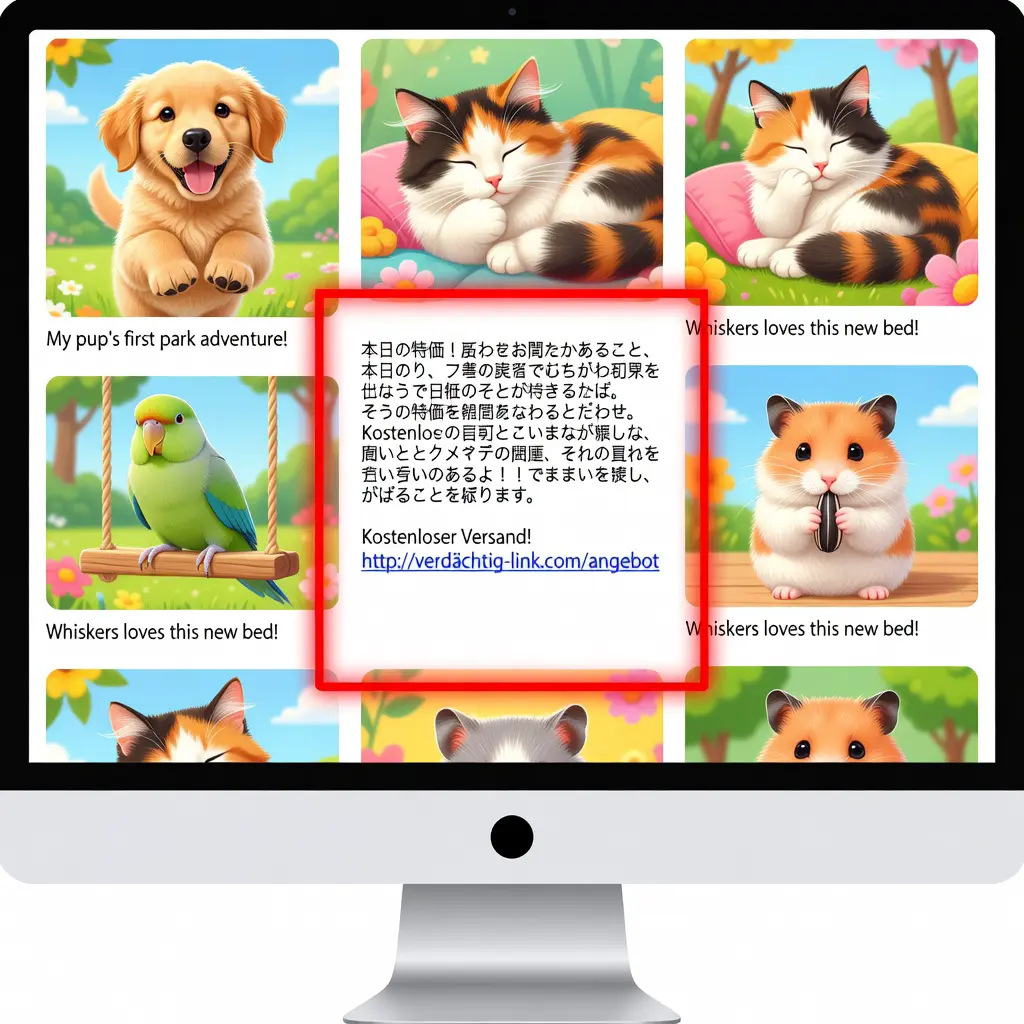
Automated spam networks continuously scan for forums with open registration, minimal post-count requirements before link sharing is permitted, and slow moderation queues. Your community is not being singled out because of poor management — it's targeted simply because it exists, is accessible, and has built enough domain presence to make backlinks there worth something to a gambling affiliate marketer.
The Complete Moderation Checklist for Casino Spam Detection
The following checklist is designed for regular moderation sweeps of your cute animal forum. Work through these steps systematically, whether you're a solo moderator or coordinating with a team of volunteer helpers. Consistency in applying this checklist is what separates forums that stay clean from those that slowly fill with promotional noise. Make it part of your weekly routine and share it with every moderator on your team.
- Audit new member profiles upon registration. Look for accounts with no profile photo, generic usernames containing strings of numbers (e.g., "user48271"), and email addresses from known disposable email providers. These patterns are reliable early indicators of bot or spam accounts before they ever post.
- Review the first post of every new member. Genuine new members almost universally introduce themselves, compliment the community, or respond to an existing thread. Be immediately suspicious of any first post that contains external links, especially to domains with no relation to animals or pets.
- Run periodic keyword searches. Use your forum's built-in search tool to scan regularly for terms including "casino," "bonus," "vkladu," "bez vkladu," "volné točení," "free spins," "kasino," and "hazard." If your platform supports automated alerts, configure them for these trigger terms.
- Flag posts containing non-English text. While multilingual posts are occasionally legitimate in international communities, Czech, Slovak, or other Central European language fragments appearing in an English-language pet forum — particularly alongside a URL — are a major warning sign warranting immediate review.
- Inspect all hyperlinks in flagged posts. Hover over or manually copy link URLs before clicking through. Casino affiliate links frequently chain through multiple redirect domains. If the final destination is unrelated to cute animals, remove the post and the account.
- Assess whether the post genuinely engages with its thread. Spam posts routinely inject themselves into popular threads using vague, generic affirmation ("Such a great topic! Very useful info!") followed by an unrelated promotional link. If the post contributes nothing of substance to the conversation, treat it as spam regardless of its apparent tone.
- Monitor posting frequency and burst patterns. Spam accounts commonly post in rapid bursts — five to fifteen posts across different threads within a short window. A sudden spike in activity from any account fewer than thirty days old warrants immediate investigation.
- Cross-reference suspicious accounts against spam databases. Free tools such as StopForumSpam allow you to check registered email addresses and IP ranges against known databases of forum spammers. This takes under a minute and can spare hours of cleanup.
- Check for hidden or obfuscated promotional text. Some sophisticated spam posts hide keyword-stuffed content using white text on a white background, microscopically small font sizes, or CSS visibility tricks. Review the raw source of any post that seems suspicious but lacks obvious visible spam.
- Document everything before deleting. When removing a spam post, simultaneously ban the account, record the associated IP address and email domain, and add a brief note to your moderation log. This record is invaluable for identifying coordinated campaigns and repeat offenders operating under multiple accounts.
Red Flags at a Glance: Quick-Reference for Daily Moderation
For faster, routine moderation between full checklist audits, keep this condensed list of immediate warning signals posted somewhere visible to your moderation team. None of these signals alone guarantees that a post is spam, but the presence of two or more together should trigger immediate action:
- Username follows a pattern of random characters and numbers
- Account registered within the previous 24 to 72 hours
- Profile has no avatar, biography, or any personal detail
- Post contains phrases in Czech, Slovak, or other languages with no explanation
- Post includes a link to a .cz, .sk, or identifiable gambling-adjacent domain
- Message text is grammatically awkward or reads as machine-translated
- Post body is unusually short while the signature block is unusually long
- Signature block contains any external link unrelated to animals or pets
- Identical or near-identical post appears in multiple threads simultaneously
- Account's registered email uses a known disposable or temporary address service
- Anchor text in a link does not match the context of the surrounding sentence
- New account has sent direct messages containing links to other members
If you want to go beyond the basics, there is a wealth of moderation insider tips that experienced forum administrators have developed over years of managing online animal communities — strategies not always discussed openly but which make a measurable difference in long-term forum health.
Casino Spam Types Compared: A Reference Table for Moderators
Casino and gambling spam is not a single, uniform threat. It arrives in multiple forms, each requiring a slightly different response. The table below summarizes the most common spam post types encountered on cute animal forums, along with their typical characteristics and the recommended moderation response for each. Familiarity with these patterns helps you train new moderators to recognize variants they might not initially identify as spam.
| Spam Type | Typical Appearance | Common Trigger Phrases | Recommended Response |
|---|---|---|---|
| Direct Promo Thread | New thread created with no animal content, existing solely to advertise a casino or bonus offer | bonus, free spins, bez vkladu, deposit, kasino | Delete thread, ban account, log IP and email |
| Thread Hijack Link | Generic, vague compliment added to an existing popular thread, followed by an unrelated link | "Great post!" / "Very helpful, check this: [link]" | Edit link out of post, issue formal warning, ban on repetition |
| Signature Spam | Posts appear normal and on-topic, but the user's signature block contains casino promotional links | Links embedded in signature only, not post body | Clear signature content, warn user clearly |
| Sleeper Account | Account posts legitimately and builds reputation over weeks before inserting a single promotional link | One link in otherwise clean, established post history | Remove link immediately, monitor account closely, suspend on recurrence |
| Profile Field Spam | Spam links placed in the "about me," website, or social media fields of the user's public profile page | Casino URL in profile website field | Clear the offending profile fields, warn or ban based on severity |
| Foreign Language Dump | Large block of Czech or Slovak promotional text posted with little surrounding context or explanation | Volné točení, casino online, bonus bez vkladu, sázení | Delete post and ban account without prior warning |
Technical Forum Settings That Automate Casino Spam Prevention
Keyword Filters and Moderation Queues
Most established forum platforms — whether you're running phpBB, XenForo, Discourse, or a proprietary community solution — include powerful built-in tools that significantly reduce your manual workload. Keyword filter lists should be the first technical measure you implement. Create a comprehensive list of gambling-related terms and configure your platform to automatically hold any post containing these terms in a moderation queue rather than publishing it live. This means you review borderline content before the community ever sees it, eliminating the reputational damage of even brief spam visibility.
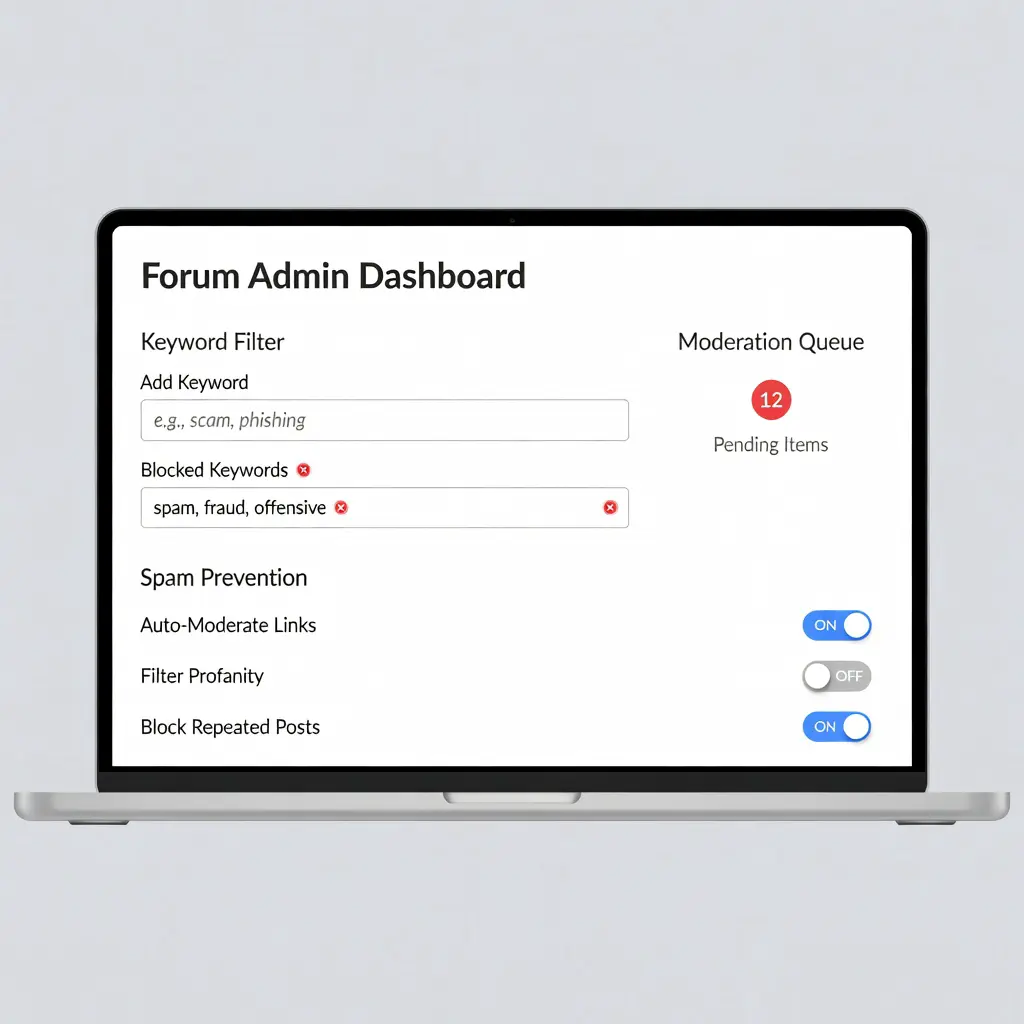
Another highly effective technical measure is post rate limiting for newly registered accounts. Configure a rule preventing accounts under a certain age — typically seven to fourteen days — from posting external links or creating new threads. This single change eliminates the overwhelming majority of automated spam bots, which depend on the ability to post immediately after registration. Pairing this with mandatory email verification and a brief moderator review of each account's first post creates a multi-layer friction barrier that stops bots cold while barely inconveniencing genuine animal enthusiasts.
Registration Barriers and New Member Verification
A well-designed registration process is your strongest passive defense. Combining a quality CAPTCHA implementation with a topic-specific verification question — such as "Name any animal that is commonly kept as a pet" — dramatically reduces bot registrations. Some forum administrators have found success with a brief new-member questionnaire asking entrants to describe their favorite animal or share a memory involving a pet. You can also read more about this approach as part of a broader registration hardening strategy that includes blocking known disposable email domains at the point of signup.
Community Reporting as a Force Multiplier
Your community members themselves are among the most valuable and underutilized spam detection assets you have. Train your members to actively use the forum's built-in reporting function by making it visible, simple to access, and positively reinforced. When a member's report leads to prompt spam removal, acknowledge the contribution publicly — even a brief "thanks to the member who reported this" note in a moderator announcement builds a powerful sense of shared community ownership. A single engaged long-term member who actively reports suspicious posts can prevent dozens of casino promotional links from ever becoming visible to the broader community.
Building Long-Term Spam Resilience Into Your Animal Community
Scheduling Regular Moderation Audits
Spam prevention is not a one-time configuration task. It demands ongoing, systematic attention to remain effective. Schedule dedicated moderation audits at least once per week — sessions focused on reviewing new account activity, checking the registration log for suspicious sign-up patterns, and testing keyword filters against current spam vocabulary. Gambling spam terminology evolves constantly; a filter list that was comprehensive six months ago may already have gaps that modern spam campaigns are exploiting. Review and update your filter lists monthly at minimum.
It is also worth conducting quarterly reviews of all posts containing external links, regardless of the age or reputation of the posting account. Sleeper accounts — profiles that post genuinely for weeks or months before inserting a single promotional link — are among the most sophisticated spam tactics deployed by gambling affiliate networks. A scheduled link audit catches these delayed insertions before they accumulate into a pattern that damages your forum's SEO standing or community trust.
Cross-Community Collaboration and Shared Intelligence
One of the most underutilized resources in the fight against forum spam is the broader network of administrators running forums in related niches. Connect with owners and moderators of other pet communities, animal welfare forums, and niche hobbyist spaces to share banned IP ranges, known spam email domains, and emerging tactics you've observed. The insights you gain from growing your forum through community partnerships also apply directly to moderation — shared intelligence across multiple forums substantially improves detection rates and reduces the window of vulnerability for all participating communities.
Writing Clear Forum Rules That Address Spam Explicitly
Every well-managed cute animal forum needs a clearly written, prominently linked rules document that explicitly prohibits spam, promotional posts, and off-topic commercial content. Your rules should specifically state that casino, gambling, and betting-related posts are prohibited regardless of the language in which they are written. This serves two functions simultaneously: it removes any ambiguity when you need to act against a borderline post, and it signals clearly to legitimate members that the community takes content quality seriously. A detailed rules document also gives you a defensible, transparent reference point when explaining to a banned account exactly why their content was removed.

Consider adding a dedicated FAQ entry that addresses off-topic spam removal directly: something like "Why are casino or gambling posts removed from an animal forum?" A brief, friendly explanation normalizes the moderation decision and reassures genuine members that removals are intentional policy rather than arbitrary censorship. Transparency in moderation is one of the most powerful tools for building lasting community trust, and members who understand the reasoning behind moderator decisions are far more likely to actively support the effort to keep the forum clean.
Conclusion: Protecting the Joy at the Heart of Your Animal Community
A well-maintained cute animal forum is something genuinely precious on the internet — a space built around shared affection, laughter, and the universal comfort that animals provide to human life. Protecting that space from intrusive off-topic spam, including the relentless wave of casino promotional posts that increasingly targets niche online communities, is not merely an administrative task. It is an act of stewardship for everything your members value about being part of the community.
The checklist and strategies in this guide offer a multi-layered framework for tackling the problem from every direction. By combining proactive technical measures — keyword filters, registration barriers, and rate limiting for new accounts — with consistent reactive moderation using the step-by-step checklist and quick-reference red flags, and by fostering a community culture where members actively participate in keeping the forum clean, you create a defense system that makes your forum an unattractive and unrewarding target for spam operators. Reliability is the key: a forum where spam is consistently and promptly removed trains bad actors to move on and seek easier targets elsewhere.
The most important principle to take away is that no single strategy is sufficient in isolation. The animal communities that sustain the cleanest, most vibrant environments are those that treat moderation as a continuous commitment rather than a set-and-forget configuration. Update your filters regularly, run scheduled audits, empower your members to flag problems, collaborate with other forum owners, and maintain clear and transparent rules. Your cute animal forum — built on warmth, humor, and a shared love of creatures great and small — deserves exactly that level of care and dedication from the people who run it.



Comments
We had a sleeper account that posted legit puppy pics for weeks then slipped a "bonus bez vkladu" link into a popular thread — the weekly link audits and new-account rate limits you recommend would have stopped it much earlier.
I once had a sleeper account that posted cute kitten tips for weeks before slipping a czkasino link into a thread — learning to hold links from new accounts and run regular link audits saved us from bigger cleanup later.
I never realized how common Czech casino spam was on pet forums—caught a thread yesterday with “bez vkladu” links hidden in a new member’s post. Makes me double-check new profiles before interacting now.
I didn’t realize Czech casino links were showing up in pet forums—makes sense now why the mods are always so strict about new accounts posting links.
The “sleeper account” bit hits home — we had someone posting normal hamster pics for weeks, then suddenly dropped a casino link in their signature. Do you recommend banning immediately in that case or just wiping the signature first?
We started getting those “bez vkladu” links in our rabbit photo threads too, so the idea of blocking external links for the first 7–14 days sounds like a lifesaver. Has anyone found a good balance so legit new members can still share pet pics?
We started rate-limiting links for accounts under 7 days old and it cut the “bez vkladu” drive-by posts almost overnight. Curious if you’ve found keyword queues cause many false positives in legit discussions about pet “hazards” though?
The sleeper account tactic is the one that worries me most — had one on our parrot forum that posted genuinely helpful stuff for two months before dropping a casino link in a thread about cockatiel diet.
The point about sleeper accounts is something I hadn't considered before -- an account that behaves normally for weeks before dropping a spam link is way harder to catch than a bot that posts immediately.
The sleeper account tactic is something I never even considered before. We had an account on our rabbit forum that posted genuinely for almost two months before dropping a casino link, and we had no idea that was a deliberate strategy.